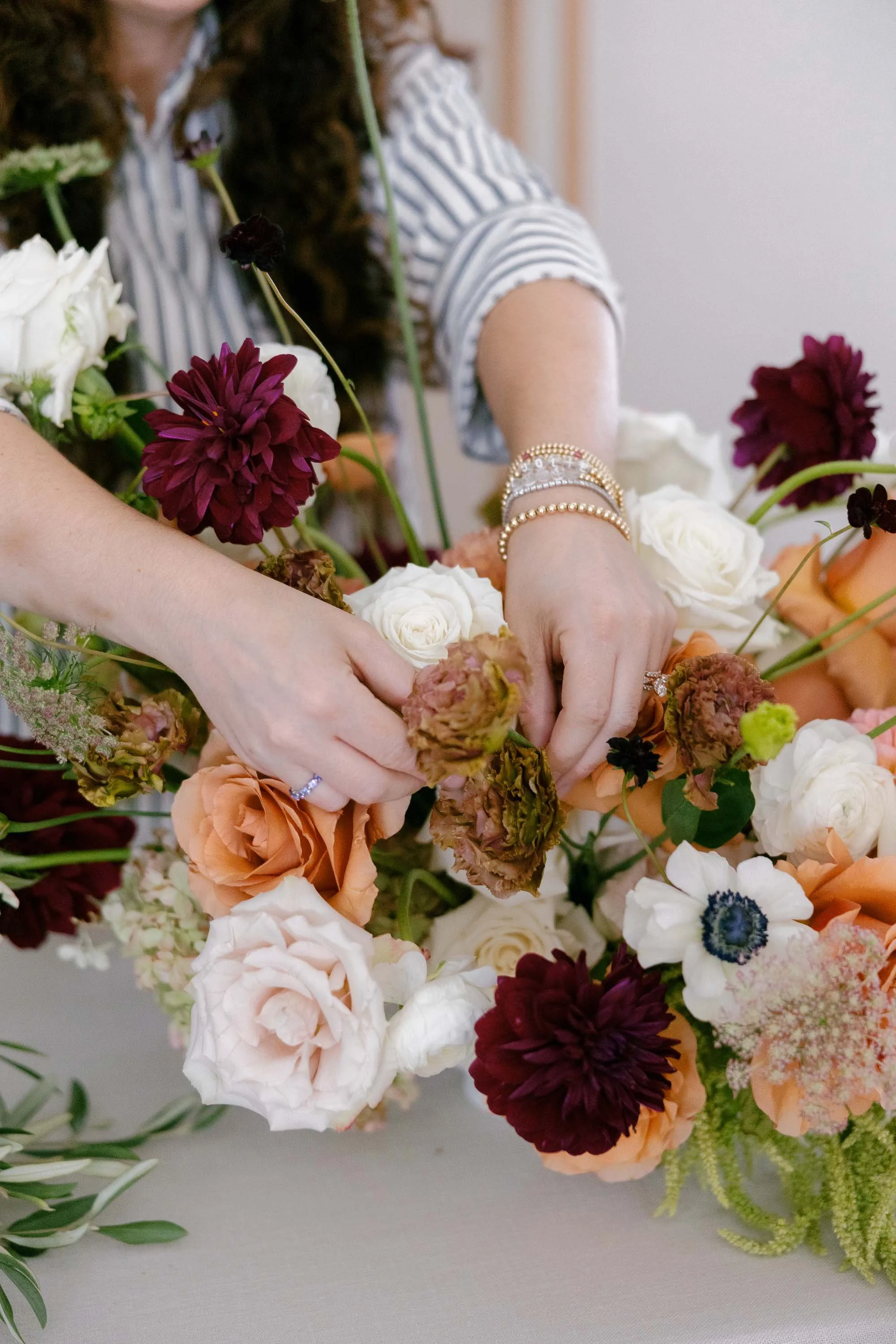
From statement ceremony installations to thoughtfully designed reception tables, discover where wedding flowers can make the greatest impression.
When couples begin imagining their wedding flowers, the bridal bouquet is often one of the first things that comes to mind.
And understandably so.
Your bouquet is personal. It's something you'll carry down the aisle, hold in some of your most meaningful photographs, and remember long after the wedding day has passed.
But some of the most impactful floral designs at a wedding have very little to do with the bouquet itself.
They're the flowers that frame your ceremony, welcome your guests, transform your reception space, and create those beautiful moments that make an entire celebration feel cohesive.
As a Northern California wedding floral designer, I love helping couples think beyond individual arrangements and consider how flowers can influence the atmosphere of their entire wedding.
Whether you're planning a romantic Napa Valley celebration, a garden wedding in Sonoma, or an elegant event in San Francisco, here are some of the floral elements that can make the biggest visual impact.
1. Ceremony Flowers: Creating a Beautiful First Impression
Your ceremony is one of the most meaningful moments of your wedding day.
It's also one of the first opportunities to establish the floral aesthetic of your celebration.
From lush garden-inspired arrangements to architectural floral installations, ceremony flowers can transform a space and create a beautiful focal point for exchanging vows.
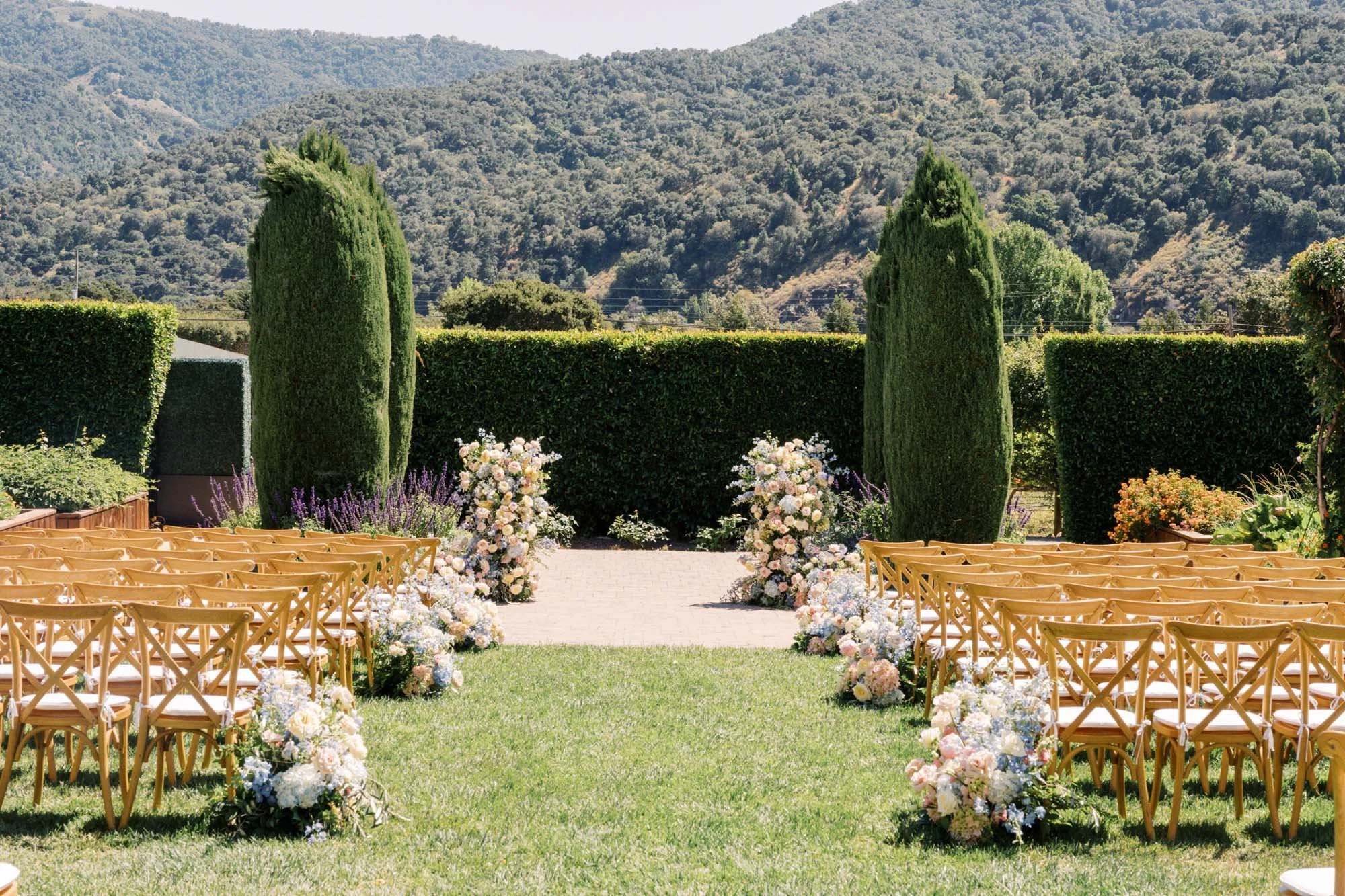
For an outdoor Wine Country wedding, I love arrangements that complement the landscape without overwhelming it.
Low, meadow-inspired flowers lining the aisle can feel especially romantic against a backdrop of vineyards, gardens, or mature trees.
For a historic San Francisco venue, a more structured floral installation might beautifully complement an elegant doorway, staircase, or architectural feature.
My floral design advice: Consider where guests will naturally look during your ceremony. The flowers surrounding that focal point will often have a greater visual impact than arrangements placed throughout the entire space.

2. The Wedding Aisle: More Than a Walkway
There's something incredibly beautiful about an aisle lined with flowers.
It creates a sense of anticipation, draws the eye toward the ceremony, and adds dimension to photographs of the processional.
But aisle flowers don't always need to be large or elaborate.
Sometimes a series of low arrangements with natural movement can create a softer, more romantic effect than traditional arrangements placed at the ends of each row.
For garden weddings, I particularly love the look of flowers that appear to be growing naturally alongside the aisle.
In a more formal setting, thoughtfully spaced arrangements can create a polished, symmetrical appearance.
And depending on the design, some aisle flowers may be suitable for repurposing elsewhere during the reception.
My floral design advice: Before planning to move ceremony arrangements, consider their size, construction, timing, and the logistics of your venue. Not every installation can be safely or efficiently relocated.
3. Reception Centerpieces: Where Guests Experience the Flowers Up Close
While ceremony flowers create a beautiful moment, reception flowers become part of the experience guests enjoy for several hours.
This makes your tablescapes especially important.
Centerpieces influence the atmosphere of dinner, complement your linens and place settings, and bring color and texture into the reception space.
One of my favorite approaches is mixing floral heights.
Low, garden-inspired arrangements create an intimate feeling and allow guests to converse comfortably across the table.
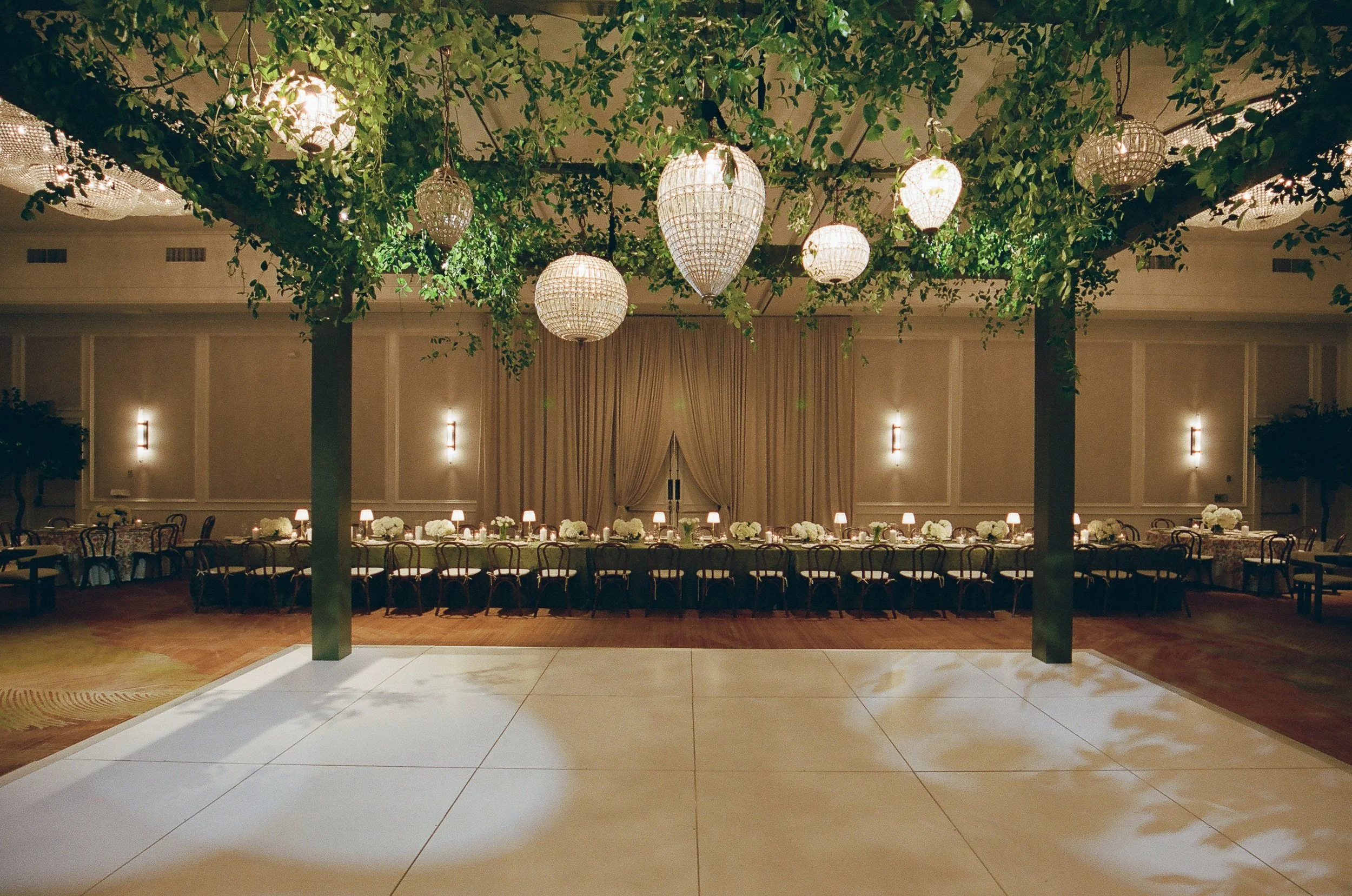
Taller arrangements can introduce dimension and help fill larger reception spaces, particularly in rooms with high ceilings or beneath a beautiful tent.
A combination of both can be especially effective.
At an Estate at Yountville wedding, for example, I designed a mixture of tall and low arrangements in shades of blue, periwinkle, cream, and greenery. Paired with candlelight and twinkling lights overhead, the varied heights helped create a romantic, layered atmosphere.
My floral design advice: Think about the entire tablescape, not just the flowers. Linens, candles, glassware, table shapes, and lighting all contribute to how the floral arrangements are experienced.

4. Statement Floral Installations: Creating a Moment Guests Remember
Sometimes a wedding calls for one truly unforgettable floral moment.
This might be a lush installation framing a ceremony, flowers cascading from an architectural feature, or a dramatic arrangement welcoming guests into the reception.
Statement installations are particularly effective because they create a clear visual focal point.
Rather than spreading a floral budget evenly across dozens of smaller arrangements, concentrating flowers in one meaningful area can sometimes make a stronger impression.
Of course, the right installation depends on the venue.
A historic mansion might offer a beautiful staircase or grand doorway.
A garden venue might have a natural archway or ceremony structure.
An elegant tent might provide an opportunity for a suspended floral installation, provided the structure and venue can safely accommodate it.
My floral design advice: Choose a statement location that guests will actually experience. A beautiful installation has even more value when it becomes part of the ceremony, cocktail hour, or reception rather than being tucked away in a rarely visited area.

5. The Reception Entrance: Setting the Tone for the Evening
One floral opportunity that couples sometimes overlook is the transition from ceremony to reception.
The moment guests enter the dinner space is a wonderful opportunity to introduce the next chapter of the celebration.
A beautiful arrangement at the entrance, flowers surrounding an escort card display, or a thoughtfully designed installation near the seating chart can immediately establish the reception atmosphere.
I particularly love when floral design connects these transitional spaces to the rest of the wedding.
Perhaps the flowers used around the seating chart echo the colors of the centerpieces.
Or a statement arrangement introduces a flower variety that appears throughout the reception.
These subtle connections make the design feel intentional.
My floral design advice: You don't need flowers in every corner. A few thoughtfully selected locations can create a more cohesive impression than numerous arrangements without a clear purpose.

6. The Sweetheart Table or Head Table: A Romantic Focal Point
Your sweetheart table or head table is naturally one of the most photographed areas of the reception.
It's where you'll share dinner, listen to toasts, and enjoy some of the first moments of your celebration as newlyweds.
Beautiful flowers can make this space feel especially personal.
For a sweetheart table, I love floral arrangements that frame the couple without obstructing their faces or overwhelming the setting.
For a long head table, a series of low arrangements paired with candlelight can create a romantic, continuous design.
This is also an area where repurposed ceremony flowers may sometimes work beautifully, depending on their construction and the layout of the venue.
My floral design advice: Consider the backdrop behind the table. Sometimes the most effective floral design is one that works with the existing scenery rather than adding another large installation.

7. Unexpected Floral Details: The Little Moments That Complete the Design
Not every memorable floral moment needs to be large.
Sometimes the smallest details bring the most personality to a wedding.
A few of my favorite possibilities include:
Delicate flowers accenting a welcome sign or escort card display.
Small arrangements on cocktail tables.
Floral details surrounding a champagne tower or cake display.
A beautifully designed arrangement for a bar or lounge.
Individual blooms incorporated into place settings, when appropriate for the table design.
Flowers framing a meaningful architectural detail.
These moments can be especially effective when they complement the larger floral installations.
The goal isn't to add flowers everywhere.
It's to create a sense of continuity throughout the celebration.
Where Should You Spend Your Wedding Floral Budget?
This is one of the questions I encourage couples to consider early in the floral design process.
Every wedding has a different budget, venue, guest count, and set of priorities.
And the floral elements that create the biggest impact for one celebration may not be the same for another.
For example, a couple getting married in a beautiful vineyard setting may want to prioritize ceremony aisle flowers and reception tables rather than a large floral arch.
Another couple celebrating inside a historic San Francisco mansion may want a dramatic ceremony installation that complements the architecture.
Here are three things I recommend considering:
Prioritize the Spaces That Matter Most
Think about where you'll spend the most time and where your guests will gather.
Your ceremony and reception are often natural priorities because they're central to the wedding experience.
Consider the Scale of Your Venue
A large ballroom may need arrangements with more height and presence to feel balanced.
An intimate garden venue may look beautiful with smaller, more delicate designs.
The scale of the flowers should complement the scale of the setting.
Focus on Cohesion Rather Than Quantity
A wedding doesn't need an abundance of flowers in every space to feel beautifully designed.
Thoughtful placement, a consistent color palette, and arrangements that complement the venue can create an elegant atmosphere without unnecessary repetition.
The Most Beautiful Wedding Flowers Tell a Complete Story
For me, wedding floral design is about much more than choosing beautiful flowers.
It's about understanding how each arrangement contributes to the celebration as a whole.
The ceremony flowers create anticipation.
The reception centerpieces bring warmth and intimacy.
The statement installations create memorable moments.
And the smaller details tie everything together.
When those elements work in harmony, the result is a wedding that feels personal, intentional, and beautifully considered.
Whether you're planning an intimate San Francisco wedding or a romantic celebration in Napa or Sonoma, I'd love to help you explore the floral possibilities for your day.
LC Floral Design specializes in thoughtful, romantic wedding flowers throughout Northern California, including San Francisco, Napa Valley, Sonoma, and the greater Bay Area.