From intimate garden-inspired arrangements to statement-making floral designs, discover how to choose wedding centerpieces that complement your venue, your tables, and your overall celebration.
When couples begin planning their wedding flowers, there's usually a great deal of excitement surrounding the ceremony arrangements and bridal bouquet.
But once we begin discussing the reception, another important design decision comes into focus.
What should the centerpieces actually look like?
Should every table feature a low arrangement filled with romantic garden flowers? Would tall centerpieces create a more dramatic atmosphere? Or would a combination of both bring the entire reception design together?
The answer depends on much more than personal preference.
Your venue, table shapes, ceiling height, guest count, lighting, and overall wedding aesthetic all influence which centerpiece style will feel most appropriate.
As a Northern California wedding floral designer, I love helping couples explore these possibilities. Whether I'm designing a romantic Napa Valley reception, a Sonoma garden wedding, or an elegant celebration in San Francisco, the goal is always to create flowers that feel intentional, beautiful, and perfectly suited to the setting.
Let's explore the different centerpiece styles and how to decide which approach is right for your wedding.





The Beauty of Low Wedding Centerpieces
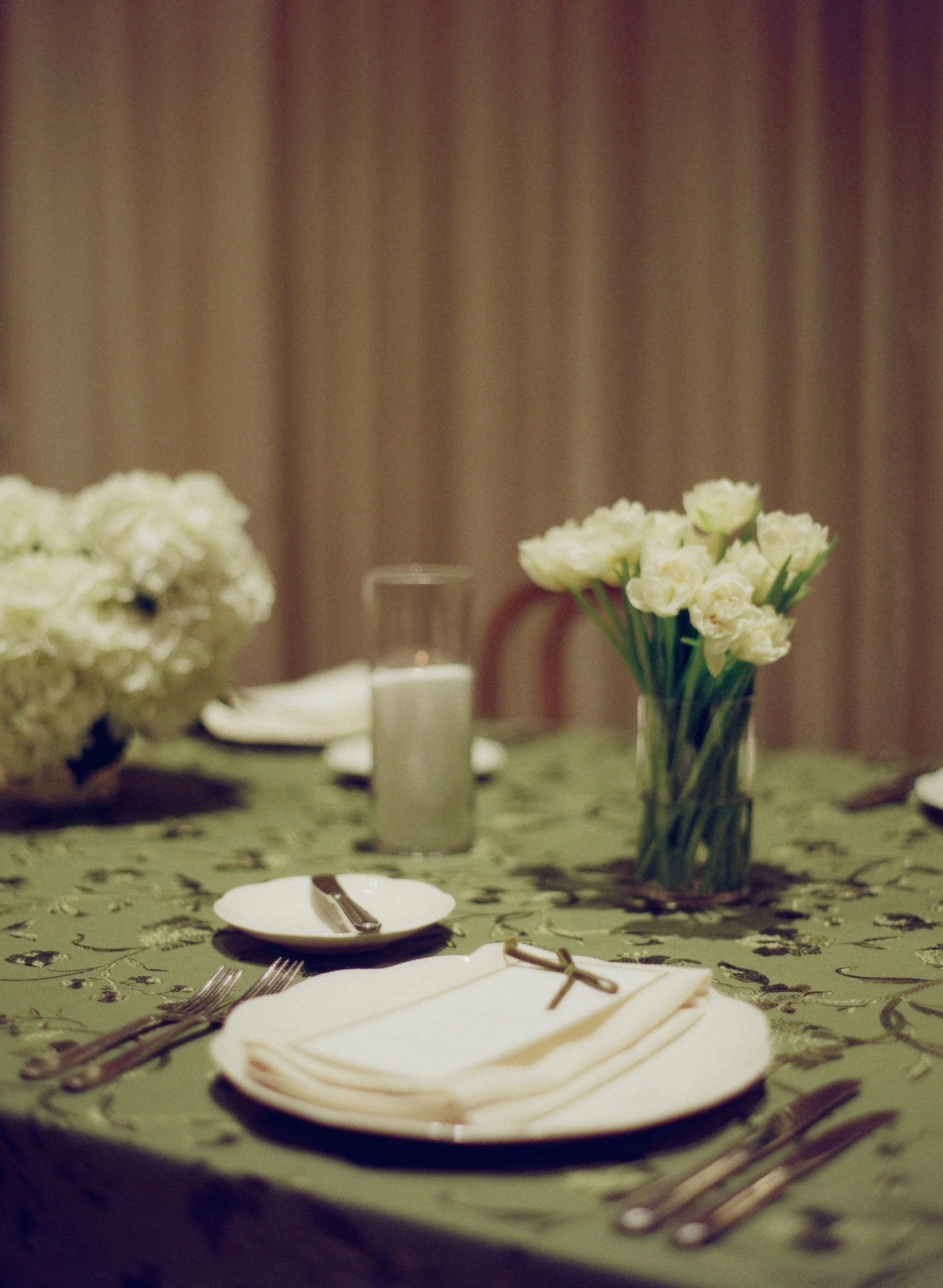
There's something undeniably romantic about a beautifully arranged collection of flowers sitting just above the table.
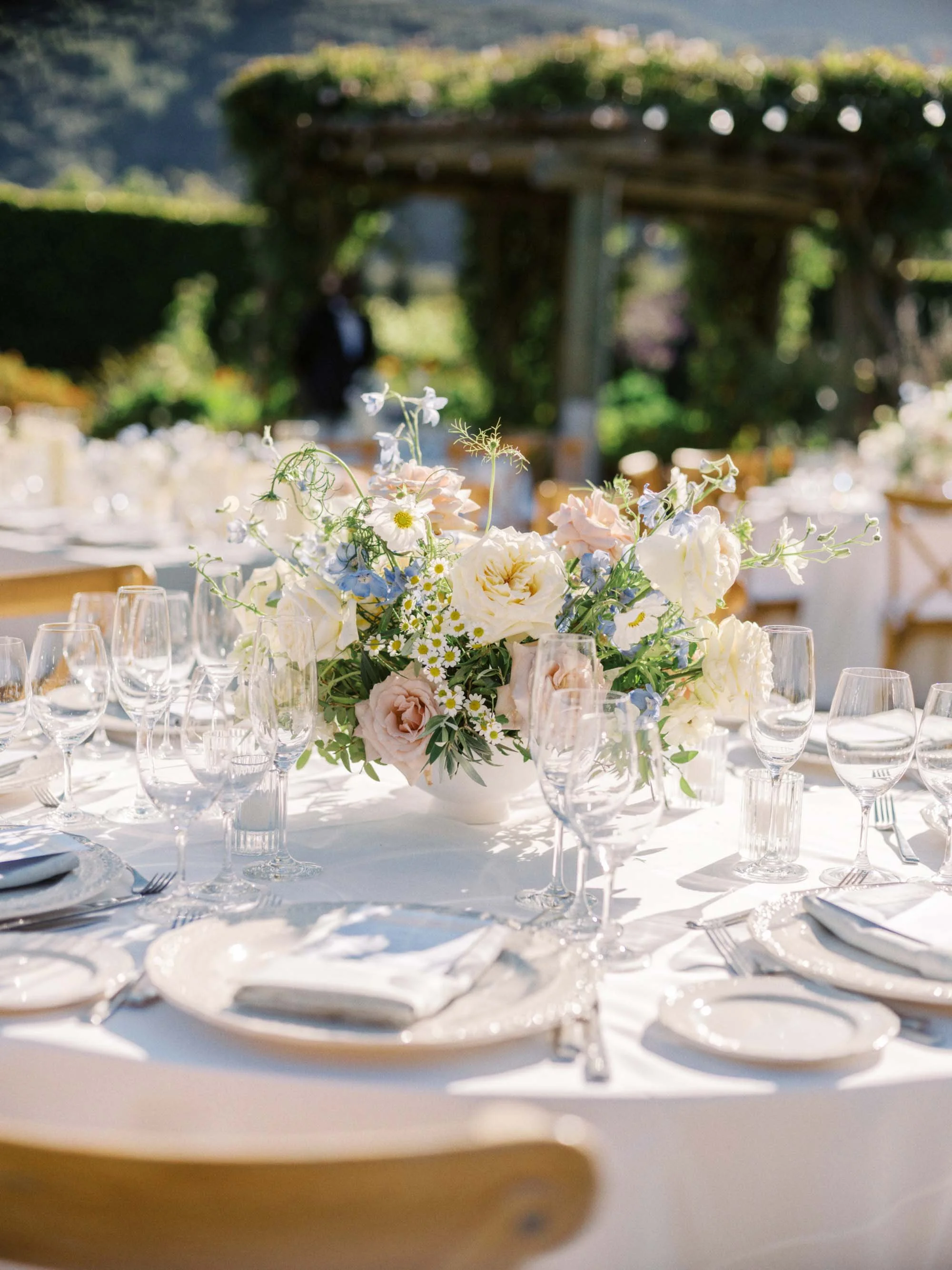
Low centerpieces create an intimate atmosphere, allowing guests to appreciate the flowers up close while still enjoying conversation across the table.
They're particularly beautiful for garden-inspired weddings, outdoor receptions, and celebrations where the tablescape itself is an important part of the design.
I love using flowers with natural movement in these arrangements.
Garden roses, ranunculus, sweet peas, peonies when available, and delicate seasonal blooms can create a soft, layered appearance.
Low arrangements also allow the other elements of the table to shine.
Beautiful linens, interesting glassware, elegant place settings, and candlelight can all become part of a cohesive design.
When Low Centerpieces Work Especially Well
Low floral arrangements can be a wonderful choice for:
Intimate wedding receptions where conversation is a priority.
Outdoor dinners overlooking vineyards, gardens, or beautiful scenery.
Long reception tables with layered floral arrangements and candles.
Venues with lower ceilings or smaller dining spaces.
Couples who love a romantic, garden-inspired aesthetic.
My design perspective: Low centerpieces don't have to feel small or understated. A series of lush arrangements with varied textures can create an incredibly abundant look while maintaining a comfortable, inviting atmosphere.


The Elegance of Tall Wedding Centerpieces
Tall centerpieces introduce an entirely different feeling to a reception.
They draw the eye upward, create dimension, and can help bring a sense of scale to larger spaces.
In a grand ballroom or beneath a beautiful reception tent, taller floral arrangements can make the room feel more complete.
I particularly love the way tall arrangements can complement architectural features.
A historic San Francisco venue with high ceilings may benefit from flowers that echo the height and grandeur of the room.
Similarly, a large tented reception in Napa Valley can feel especially romantic when taller arrangements are incorporated throughout the space.
Tall centerpieces can also create a beautiful visual rhythm across a reception.
As guests enter the room, their eyes move between the arrangements, helping the entire space feel thoughtfully designed.
When Tall Centerpieces Work Especially Well
Tall floral arrangements may be ideal for:
Grand ballrooms and historic wedding venues.
Large reception tents with substantial ceiling height.
Formal weddings with an elegant, sophisticated aesthetic.
Spacious reception layouts that benefit from additional visual dimension.
Couples who want their flowers to make a statement.
Of course, height requires thoughtful planning.
The arrangement should be designed so that guests can comfortably see and converse across the table, with the floral portion positioned appropriately above their sightlines.
The stability of the vessels and structures is equally important, particularly for outdoor receptions where wind may be a factor.
My design perspective: Tall centerpieces should feel graceful and proportional to the room. The goal is to create beautiful height without making the table feel crowded or overwhelming.
Why Mixing Tall and Low Centerpieces Can Be So Beautiful
One of my favorite approaches to wedding reception floral design is combining tall and low arrangements.
This creates movement throughout the room and allows different tables to contribute to the overall aesthetic in unique ways.
Rather than having every table look identical, varying the heights creates a layered, dimensional effect.
Tall arrangements draw the eye upward.
Low arrangements bring flowers closer to guests.
Together, they create a sense of balance.
And when the flowers share a consistent color palette and overall design style, the result feels cohesive rather than mismatched.

A Beautiful Example: Estate at Yountville
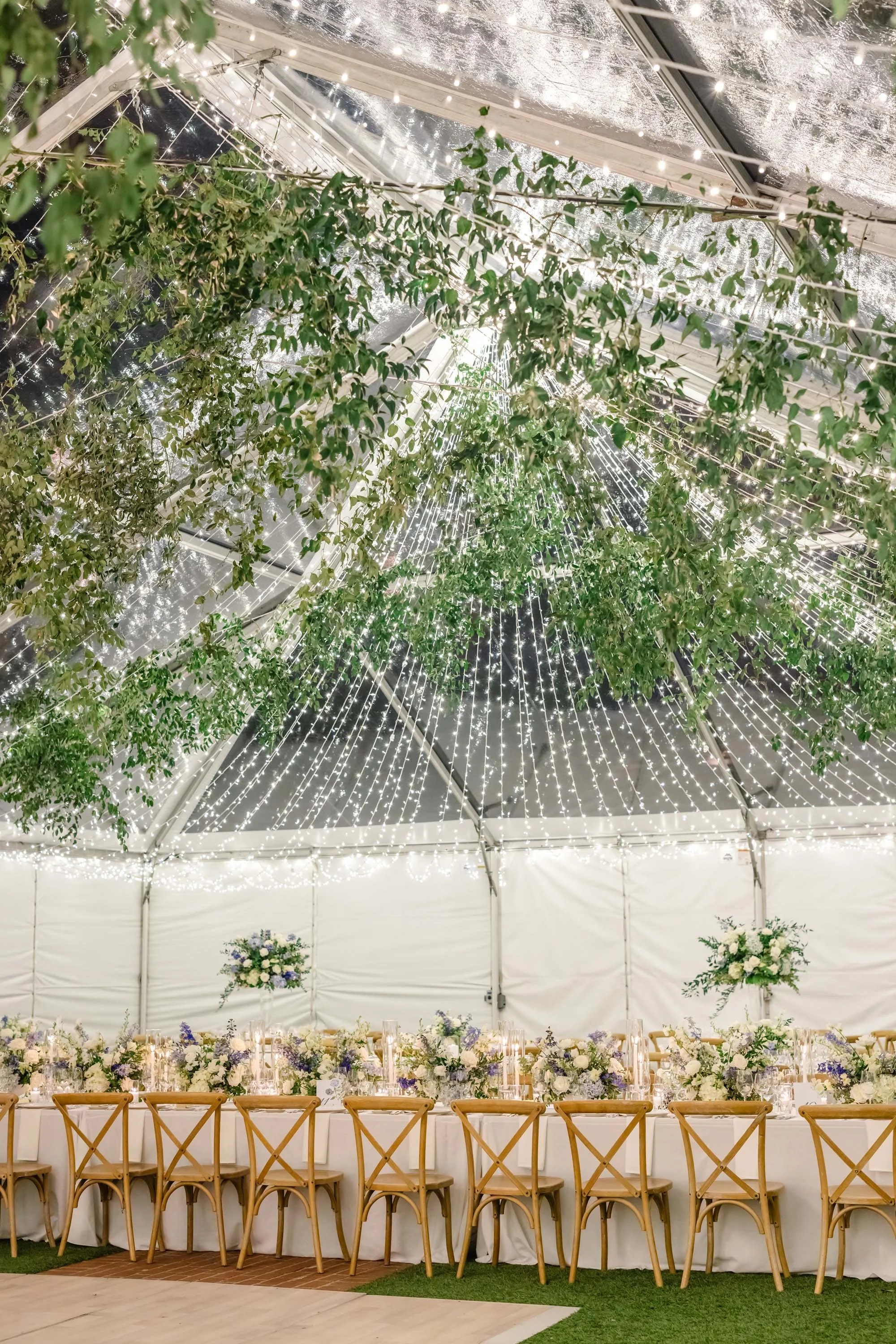
For a wedding at the Estate at Yountville, I designed reception flowers featuring a romantic palette of blue, periwinkle, cream, and greenery.
The arrangements included a combination of tall and low floral designs, creating dimension throughout the reception space.
Candlelight brought warmth to the tables, while twinkling lights overhead added another layer of romance.
What I loved about this design was the way the different centerpiece heights worked together.
The taller arrangements created visual interest throughout the tent, while the lower flowers helped maintain an intimate atmosphere at the tables.
The result felt elegant, layered, and beautifully connected to the overall celebration.
It's a wonderful example of why couples don't necessarily need to choose just one centerpiece style.
Sometimes a little of both is exactly right.
How Your Table Shapes Influence Your Centerpieces
One of the most important considerations when choosing wedding centerpieces is the shape of your reception tables.
A floral design that works beautifully on a large round table may not be the best choice for a long rectangular table.
Understanding how the flowers interact with the table shape can make a significant difference.
Round Wedding Tables
Round tables naturally lend themselves to a central floral arrangement.
A lush, low centerpiece can create a beautiful focal point without interrupting conversation.
Tall arrangements can also work wonderfully on round tables, particularly in larger reception spaces.
For weddings with multiple round tables, alternating tall and low centerpieces can create a balanced, interesting design throughout the room.
Long Rectangular Tables
Long tables offer opportunities for a different kind of floral composition.
Rather than relying on one central arrangement, I love creating a series of smaller floral groupings that extend along the length of the table.
This approach can feel romantic and abundant, particularly when paired with candlelight.
A collection of low arrangements with varied shapes and textures creates a beautiful sense of movement.
For more formal receptions, a thoughtfully designed floral runner can also be stunning.
The key is ensuring there's enough room for place settings, glassware, candles, and any shared dining elements.
A Mix of Round and Rectangular Tables
Many wedding receptions incorporate both round and rectangular tables.
And this can be a wonderful opportunity to introduce variety into the floral design.
For example, round tables might feature a combination of tall and low arrangements, while long tables incorporate smaller floral groupings and candlelight.
The arrangements don't need to be identical.
They simply need to feel connected through color, texture, and design style.
I've worked with mixed table layouts at Northern California wedding venues, including Carneros Resort and Spa, where the combination of round and rectangular tables offered opportunities for different floral compositions.
My design perspective: The best centerpieces are designed for the tables they'll actually sit on, not selected independently of the reception layout.
Consider the Height and Architecture of Your Venue
Before deciding on centerpiece heights, take a moment to think about the room itself.
Does your venue have soaring ceilings?
Is the reception taking place in an intimate dining room?
Will guests be seated beneath a tent, surrounded by gardens, or overlooking vineyards?
Each setting creates different opportunities.
Historic San Francisco Venues
In a historic mansion or grand ballroom, tall arrangements can complement beautiful architectural features and create a sense of occasion.
But low centerpieces can be equally beautiful, particularly when paired with abundant candlelight and elegant table settings.
The right approach depends on the scale of the room and the overall atmosphere you're hoping to create.
Napa and Sonoma Wine Country Venues
Outdoor receptions often benefit from floral designs that allow the landscape to remain visible.
Low arrangements can be especially lovely when the tables overlook vineyards or gardens.
For tented receptions, taller arrangements can help bring dimension to the space.
And for estate weddings, a combination of heights can create an elegant, layered atmosphere.
The important thing is to consider the relationship between the flowers and their surroundings.

Don't Forget About Candlelight
If there's one design element that pairs beautifully with wedding flowers, it's candlelight.
Candles add warmth, intimacy, and a soft glow that can completely transform the atmosphere of a reception.
And the way candles interact with your centerpieces is worth considering.
Low floral arrangements look beautiful surrounded by delicate votives or taller glass-enclosed candles.
For long tables, alternating flowers and candles can create a romantic, continuous design.
When using tall centerpieces, candlelight at table level can help connect the elevated flowers to the rest of the tablescape.
Of course, every venue has its own policies regarding open flames, so candle selections should always be confirmed in advance.
My design perspective: Flowers and candlelight should be designed together whenever possible. They're two elements of the same visual composition, and each can make the other more beautiful.
What About Your Wedding Floral Budget?
It's natural to wonder whether tall or low centerpieces are more expensive.
But the answer isn't always as simple as one being more affordable than the other.
The cost of a centerpiece depends on several factors, including the flower varieties, quantity of blooms, vessel selection, structural requirements, labor, and installation logistics.
A lush, low arrangement filled with premium flowers can require just as much investment as a taller design.
Likewise, tall centerpieces may involve additional mechanics, vessels, transportation considerations, or setup time.
Rather than assuming one style will automatically cost less, I recommend discussing your overall floral priorities with your designer.
Sometimes a combination of centerpiece styles can help distribute the floral investment strategically.
For example, statement arrangements might be featured on selected tables, while other tables incorporate smaller floral groupings and beautiful candlelight.
The goal is to create a cohesive design that feels appropriate for the celebration and the investment you've planned.
Three Questions to Ask Before Choosing Your Centerpieces
Before making a final decision, I encourage couples to think about three things.
1. What Do You Want Your Reception to Feel Like?
Are you imagining an intimate candlelit dinner, a grand formal celebration, or a romantic garden party?
Your desired atmosphere should guide the floral design.
2. What Does Your Venue Need?
A spacious ballroom may benefit from height and dimension.
An outdoor vineyard reception may look most beautiful with low arrangements that preserve the scenery.
Let the venue help inform the decision.
3. What Other Design Elements Will Be on the Tables?
Consider linens, chargers, glassware, candles, menus, and the overall table layout.
Your flowers should complement these details rather than compete for space.
So, Tall, Low, or a Little of Both?
The wonderful thing about wedding floral design is that there's no single right answer.
Low centerpieces can feel intimate, romantic, and beautifully understated.
Tall arrangements can introduce elegance, dimension, and a wonderful sense of occasion.
And combining both can create a reception that feels layered, dynamic, and thoughtfully designed.
What matters most is choosing flowers that complement your venue, reflect your personal style, and contribute to the atmosphere you want your guests to experience.
For me, the most beautiful wedding centerpieces aren't necessarily the largest or most elaborate.
They're the arrangements that feel perfectly at home in the celebration.
Let's Create a Beautiful Reception Together
At LC Floral Design, I love creating wedding flowers that feel romantic, personal, and thoughtfully connected to the setting.
Whether you're planning a candlelit San Francisco reception, a garden wedding in Sonoma, or an elegant tented celebration in Napa Valley, I'd love to help you explore the possibilities for your wedding flowers.
From delicate garden-inspired centerpieces to statement arrangements filled with texture and movement, every design begins with understanding your vision.