Of all the flowers I design for a wedding day, there is something particularly special about the bridal bouquet. It's the arrangement that accompanies you down the aisle, appears in some of the most cherished photographs of your wedding day, and is held in your hands during one of the most significant moments of your life.
But have you ever stopped to wonder why brides carry flowers in the first place?
The tradition has a rather fascinating history, and while the bridal bouquet has evolved considerably over the centuries, the sentiment behind it remains remarkably similar: to carry something beautiful and meaningful into a new chapter of life.
The History of the Bridal Bouquet
Before Bouquets Were About Beauty
The relationship between flowers and weddings dates back to ancient civilizations. In ancient Rome, flowers and floral garlands were associated with fertility, fidelity, and new beginnings.
During the Middle Ages, fragrant herbs and botanicals were believed to offer protection from evil spirits and illness. Rather than being selected purely for their beauty, these botanicals carried a deeper purpose rooted in the beliefs and superstitions of the time.
It's quite different from today's carefully curated bridal bouquets, but the idea of carrying something symbolic into a marriage has endured for centuries.
The Victorian Era & the Language of Flowers
The 19th century marked a particularly romantic turning point in the history of wedding flowers.
When Queen Victoria married Prince Albert in 1840, she wore a wreath of orange blossoms, helping popularize the flower as part of bridal attire. In 1858, her eldest daughter incorporated myrtle into her wedding bouquet, beginning a royal floral tradition that would span generations.
The Victorian era also saw the popularity of floriography, otherwise known as the language of flowers. Entire books were devoted to the symbolic meanings of different blooms, offering inspiration for expressing sentiments of love, devotion, happiness, and affection.
Flowers were no longer simply beautiful. They could tell a story.
And isn't that a lovely concept to bring into a modern wedding?



The Bridal Bouquet Today
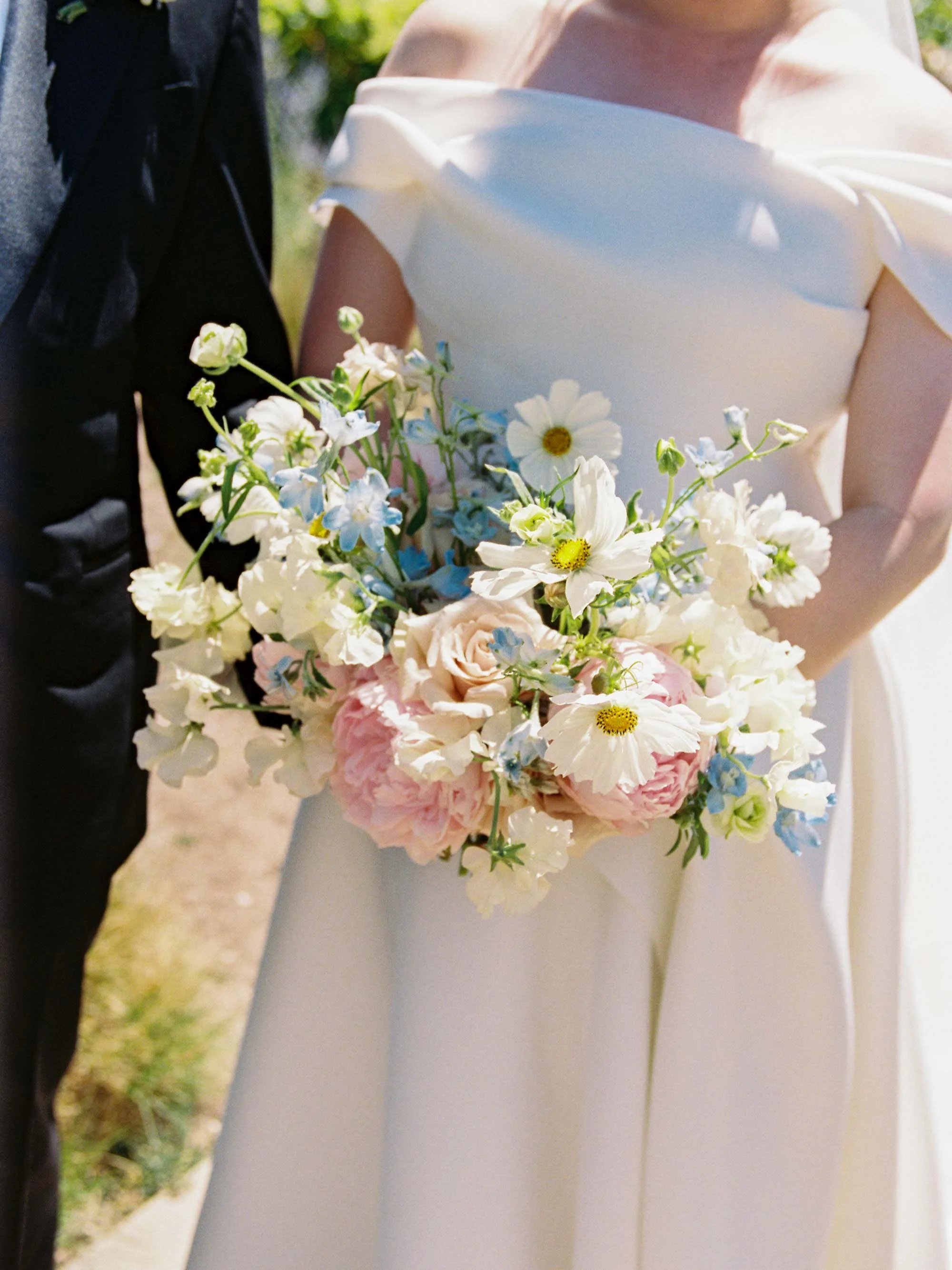
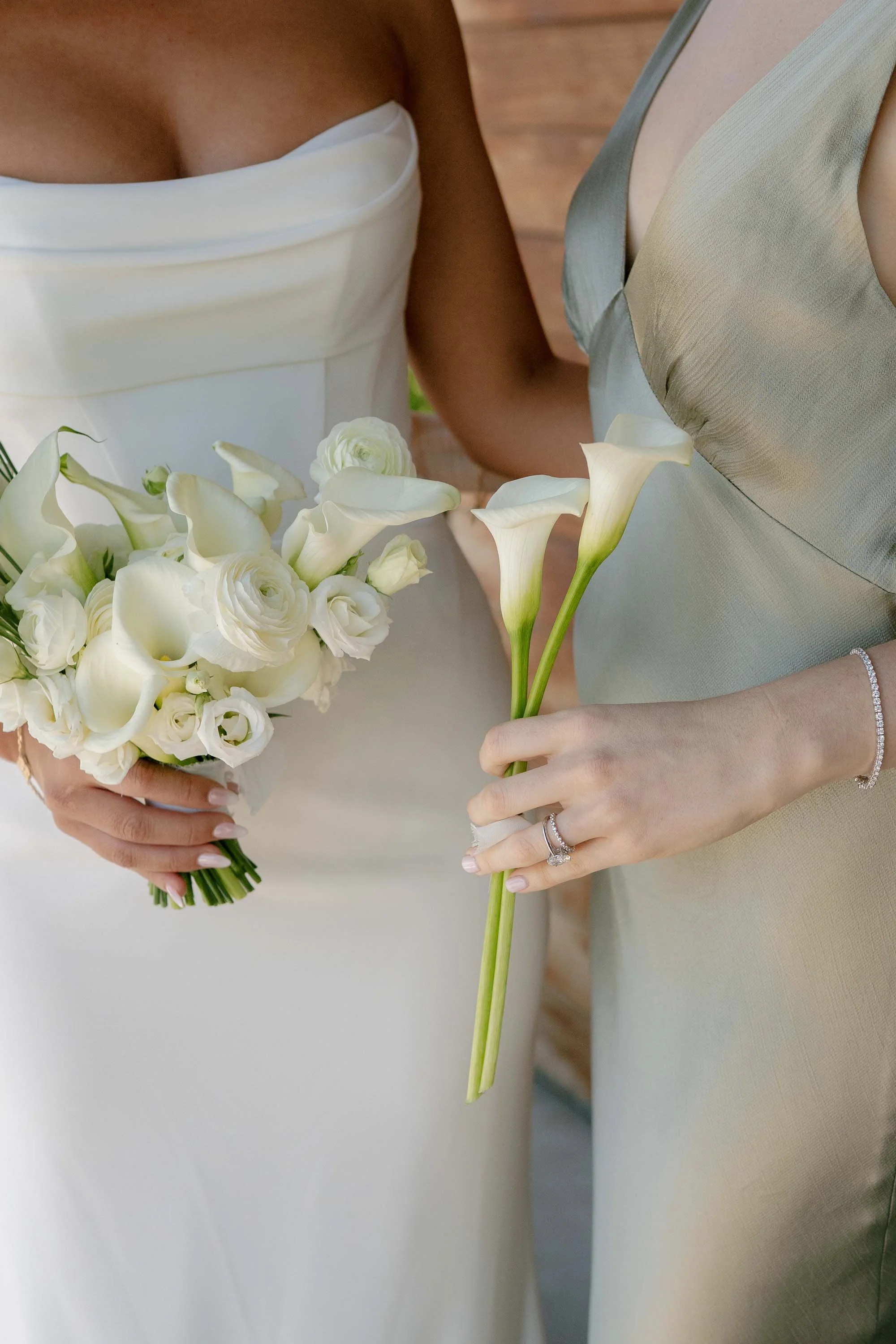
From the elaborate cascading bouquets of the 1980s to the tightly arranged rose bouquets of the early 2000s and the more organic, garden-inspired designs seen today, bridal bouquet styles have continually evolved.
Today, there is an incredible amount of freedom when it comes to bridal floral design. Bouquets can be sculptural and unexpected, understated and elegant, overflowing with seasonal blooms, or composed entirely of a single flower variety.
But beyond the aesthetics, I love the idea of returning to the bouquet's original sentiment and designing something that carries personal significance.
8 Beautiful Ways to Make Your Bridal Bouquet More Meaningful
1. Wrap Your Bouquet in Fabric From Your Mother's Wedding Dress
Perhaps your mother or grandmother still has her wedding dress tucked away, but wearing it isn't quite your vision for your own wedding day.
With her permission, a small piece of lace, silk, satin, or even a ribbon from her gown can be incorporated into the wrapping of your bouquet.
It is a beautiful way to bring a piece of another generation's love story into your own without compromising your personal bridal style. It also makes for a particularly meaningful interpretation of the traditional something old.
2. Carry Photographs of Loved Ones
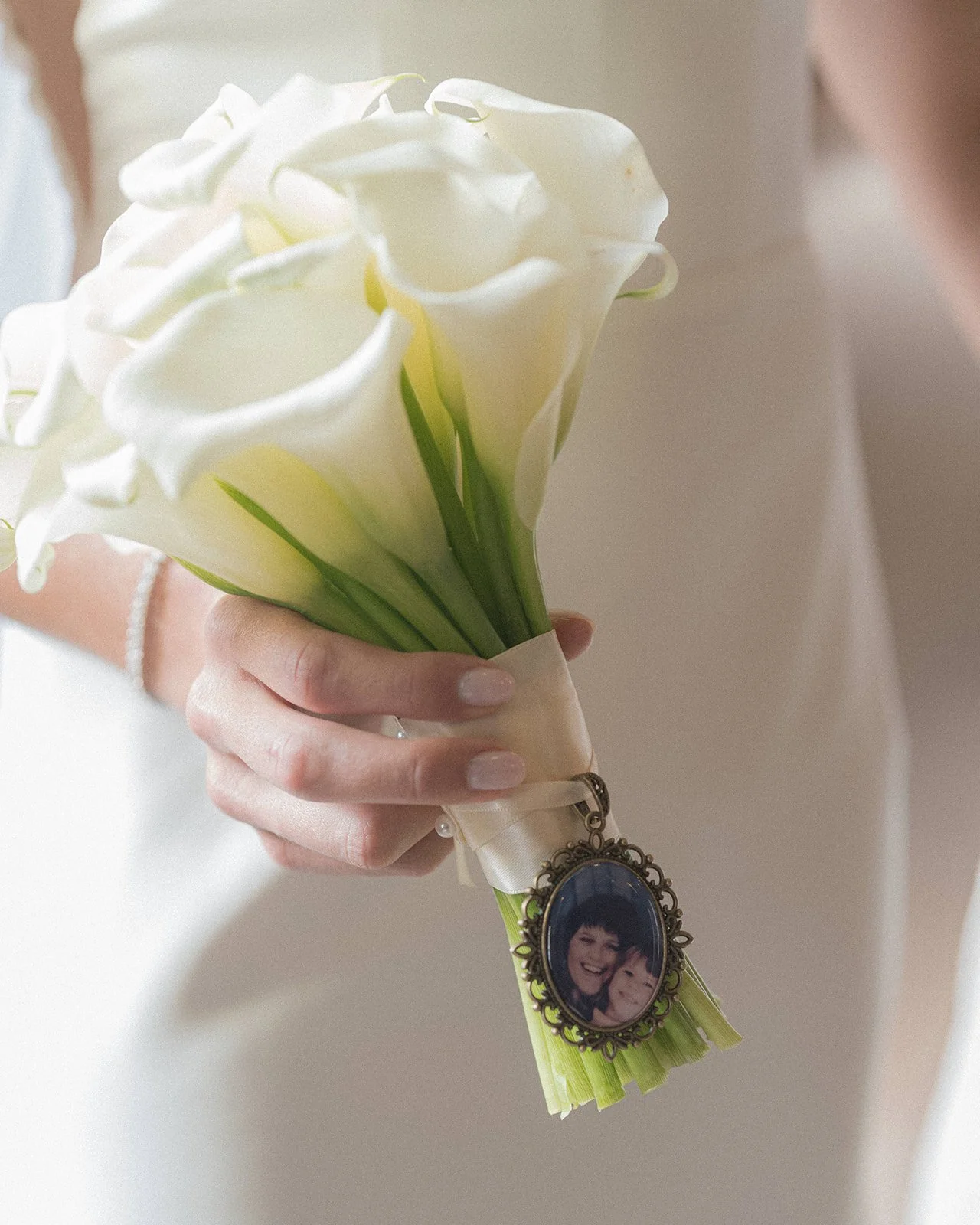
One of the most touching additions to a bridal bouquet is a miniature photograph of someone who cannot be there to celebrate with you.
Small photograph charms, lockets, or delicate frames can be secured to the bouquet's ribbon or stems, allowing you to carry the memory of a loved one with you as you walk down the aisle.
These details can be as discreet or visible as you wish. Sometimes, the most meaningful details of a wedding day are the ones that only you know are there.
3. Choose Flowers With Symbolic Meanings
Take a little inspiration from the Victorians and consider what you want your bouquet to represent.
While floral symbolism has varied throughout history and across cultures, some traditional associations include:
Lily of the valley: A return to happiness
Red roses: Romantic love
Myrtle: Marriage and love
Rosemary: Remembrance
Ivy: Fidelity and enduring affection
Tulips: Passion
Hyacinths: Constancy in love
Forget-me-nots: Remembrance and lasting connection
You certainly don't need to design your entire bouquet around the language of flowers. Even a single meaningful stem tucked among your chosen blooms can become a significant detail.

4. Incorporate a Flower From a Family Member's Wedding Bouquet
Pull out those old wedding albums.
What flowers did your mother carry? What about your grandmother? Are there any floral details from their wedding photographs that have always stood out to you?
Incorporating one of those same flower varieties into your own bouquet creates a beautiful connection between generations. You could even recreate the spirit of a family member's bouquet while giving it a contemporary interpretation that complements your own wedding aesthetic.
Imagine looking back at three generations of wedding photographs and discovering that each bride carried the same flower.
5. Include Flowers That Tell Your Love Story
Not every meaningful flower needs to have an established symbolic association. Sometimes, the most significant flowers are the ones connected to your own memories.
Perhaps your partner brought you tulips on your first date. Maybe you got engaged surrounded by hydrangeas, or your favorite weekend together involved wandering through a field of wildflowers.
It might be a flower that grew outside your first home together or one that reminds you of a particularly memorable vacation.
These are the little details that make a bouquet entirely yours. When discussing your wedding flowers with your floral designer, don't hesitate to share these stories. They can become wonderful starting points for a design.
6. Add a Family Heirloom
A grandmother's brooch, a cherished locket, a delicate strand of pearls, or a piece of meaningful jewelry can all become part of your bridal bouquet.
I particularly love heirloom details because they can be incorporated so subtly. A vintage brooch secured to a silk ribbon, for example, adds a personal touch without distracting from the beauty of the flowers themselves.
If you intend to incorporate a valuable or particularly sentimental item, be sure to discuss it with your floral designer ahead of time so it can be secured appropriately and returned safely after the wedding.
7. Take Inspiration From Your Childhood Garden
Is there a flower that immediately transports you back to childhood?
Perhaps your grandmother grew sweet peas along her garden fence. Your mother always had fresh roses on the kitchen table. Maybe the scent of lavender reminds you of summers spent somewhere particularly special.
Scent has an extraordinary ability to evoke memories, and incorporating familiar, fragrant flowers into your wedding bouquet can create a deeply personal sensory experience.
Whenever seasonality and availability allow, these nostalgic botanicals can be woven into a design that feels both beautiful and familiar.
8. Choose Flowers With a Connection to Your Wedding Location
For couples celebrating in Napa Valley, Sonoma, or elsewhere in Northern California, the surrounding landscape can provide wonderful inspiration for a bridal bouquet.
Seasonal garden blooms, olive foliage, delicate herbs, and locally grown flowers can reflect the natural beauty of the region and create a connection between your bouquet and the place where your marriage began.
This is particularly meaningful for destination wedding couples who want to carry a little piece of Wine Country into their wedding day memories.
Don't Forget to Preserve the Memories
If you've taken the time to incorporate meaningful details into your bridal bouquet, consider how you might preserve them after your wedding.
Professional flower pressing, framed botanical artwork, and other floral preservation techniques can transform your bouquet into something you can display in your home for years to come.
Even if you choose not to preserve the flowers themselves, keeping the ribbon, heirloom, or photograph charms in a wedding keepsake box allows those personal details to live on.
I also recommend letting your photographer know about any sentimental additions to your bouquet. A photograph of your grandmother's brooch nestled among the flowers or a close-up of the lace from your mother's wedding dress may become one of the most treasured images in your wedding gallery.
A Bridal Bouquet Should Be as Personal as the Person Carrying It
There are countless decisions to make when designing your wedding flowers, from the overall color palette to the ceremony installations and reception arrangements. But the bridal bouquet offers an opportunity to create something a little more intimate.
It doesn't have to follow a trend. It doesn't have to look like something you saved on Pinterest. It doesn't even have to contain the same flowers as the rest of your wedding.
It simply needs to feel like you.
At LC Floral Design, I approach bridal bouquet design with an appreciation for both artistry and sentiment. Whether that means incorporating a meaningful flower, honoring a family tradition, or creating something entirely unexpected, I would love to help you design a bouquet that tells a story beyond what meets the eye.
After all, you're not simply carrying flowers down the aisle. You're carrying a little of where you've been, a little of who you are, and a beautiful beginning to all that comes next.